
Introduction
Winter in the your region can feel mild compared to the South Island — but even a light frost at 3°C is enough to cause trouble with a petrol machine that hasn't been properly maintained. If you've gone out to start your chainsaw, line trimmer, or blower on a cold morning and nothing's happening, fuel is often the first suspect.
The phrase "the fuel has frozen" is one we hear regularly at STIHL SHOP your local area. It's a reasonable way to describe the situation — the machine won't run, it's cold outside, and the tank has fuel in it. But what's actually going on is usually more nuanced, and once you understand it, the fix becomes straightforward.
This article walks you through what petrol actually does in cold conditions, how to tell if fuel is causing your problem, what to do about it today, and how to prevent it happening again.
Does petrol actually freeze?
The short answer is: not at any temperature you'll experience in New Zealand.
Pure petrol freezes at approximately -60°C — far below anything the your region, Waikato, or even the Central Plateau will ever see. So when your machine refuses to start on a cold morning, frozen petrol in the physical sense is almost certainly not the cause.
What CAN happen — and what most people mean when they say "frozen fuel" — is one of three things.
Water in the fuel system has frozen
Petrol and water don't mix, but water does find its way into fuel systems. Condensation forms inside partially filled tanks when temperatures swing between warm days and cold nights, as you tend to get in May and June across the North Island. If enough water accumulates, it settles at the bottom of the tank or in the carburettor bowl, and freezes solid at 0°C. Even a small ice blockage in the fuel jet is enough to stop the engine starting.
The fuel has degraded
Regular pump petrol starts to break down after about 30 days, and faster still if it contains ethanol — as New Zealand petrol does. Degraded fuel becomes thick and varnish-like, and it doesn't atomise properly in cold air. A machine that sat through autumn with a full tank of pump petrol from March is almost certainly dealing with stale fuel. It just looks like a cold-weather problem because that's when you next tried to use it.
The carburettor is gummed up
Stale fuel leaves a sticky residue inside the carburettor. In cold conditions this residue hardens and can block the jets completely. The machine may have started fine all through summer, but the carburettor has been slowly gumming up, and the cold is the last straw.
How to tell if fuel is the problem
Before pulling anything apart, run through these quick checks.
- Smell the tank. Fresh petrol has a sharp, clean smell. Stale petrol smells sour or like nail polish remover. If it smells off, that's your answer.
- Look at the fuel. Fresh petrol is nearly clear with a slight amber tint. Stale or contaminated fuel looks darker, may show water separation at the bottom (a layer of clear liquid sitting beneath the petrol), or appears cloudy.
- Check how long it's been sitting. If the machine hasn't run since before April, there's a good chance the fuel is the issue regardless of what it looks like.
- Try a full drain and fresh refill. Empty the tank, refill with fresh petrol (plus fresh two-stroke oil at the correct ratio if it's a two-stroke engine), and try again. If it fires — or at least attempts to — fuel was the problem.
What to do right now
If you suspect fuel is causing the issue, here's the sequence to follow.
Step 1: Don't force it
Repeatedly cranking a flooded or fuel-starved engine does more harm than good. It can wash oil off the cylinder walls, flood the carburettor, and drain the battery on electric-start machines. Two or three pulls is the limit — if nothing happens, stop and investigate.
Step 2: Drain the tank completely
Use a hand pump or turkey baster to remove as much old fuel from the tank as possible. Dispose of it responsibly — your local transfer station accepts old petrol.
Step 3: Check for water
If you drained the fuel into a clear container, let it sit for a few minutes. Water is heavier than petrol and will settle at the bottom as a separate clear layer. If you see separation, the system needs a thorough flush before fresh fuel goes in.
Step 4: Refill with fresh, correctly mixed fuel
For two-stroke engines — chainsaws, line trimmers, blowers, hedge trimmers — always mix petrol with the correct ratio of two-stroke oil. For STIHL equipment this is typically 50:1 (20mL of oil per litre of petrol). Use 91 octane or higher, and don't use fuel that's been sitting in a jerry can since last summer.
Step 5: Use the correct cold-start technique
With fresh fuel in, follow the cold-start procedure in your machine's manual. Most STIHL petrol tools use a choke or primer bulb sequence — using the wrong sequence can flood the engine and make the problem look worse than it is.
When the engine still won't start
If a drain-and-refill with fresh fuel doesn't solve it, the problem has moved beyond the tank. At this point you're most likely dealing with a gummed carburettor or a blocked fuel filter.
Check the fuel filter first
The fuel filter sits inside the tank on the end of the fuel line — a small white or cream-coloured cylinder. Remove it by fishing the fuel line out through the fuel cap opening (a bent wire works well), and inspect it. If it's brown, discoloured, or visibly clogged, replace it. Fuel filters are inexpensive and available over the counter at STIHL SHOP your local area.
Carburettor inspection
A gummed carburettor is harder to fix at home. The tell-tale sign is that the engine fires briefly when starting fluid or fresh fuel is sprayed directly into the air intake, but won't sustain on its own. That means fuel isn't reaching the combustion chamber via the normal route — the carburettor jets are blocked.
At this point we'd recommend bringing the machine in. Carburettor cleaning requires partial disassembly, appropriate cleaning agents, and reassembly to the correct specifications. Getting it wrong can lead to lean running, overheating, and engine damage.
When to bring it in for a service
Come to STIHL SHOP your local area if:
- Carburettor jets are blocked and you're not comfortable with internal disassembly
- There are signs of water damage beyond the fuel tank — rust or corrosion inside the carburettor bowl
- The engine has been cranked excessively and may have fuel in the cylinder
- The machine is under warranty and you don't want to risk voiding it
- You've followed all the steps above and the machine still won't start
A standard fuel system service covers draining the tank, cleaning or replacing the fuel filter, cleaning or rebuilding the carburettor, and a full operational test. Most machines are turned around within a few working days.
How to prevent this next winter
The best fix for frozen or degraded fuel is making sure it never becomes a problem in the first place. A few habits make a significant difference.
Switch to STIHL MotoMix
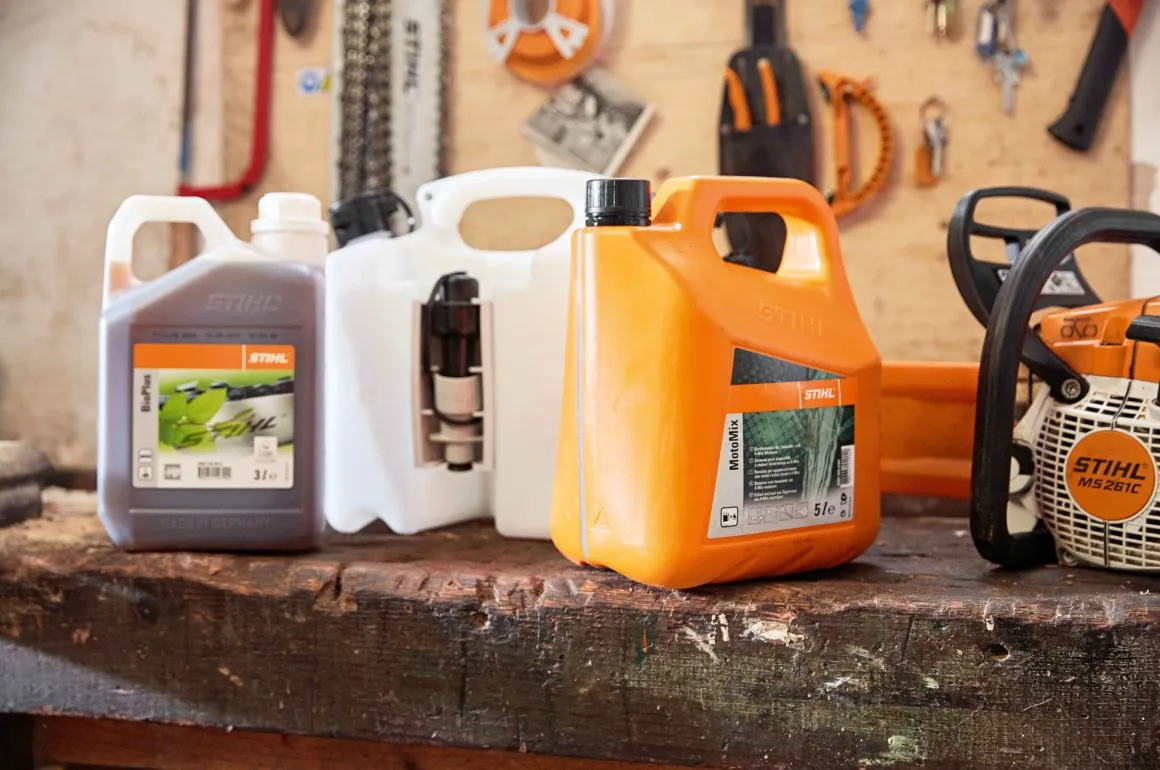
MotoMix is pre-mixed alkylate petrol. It contains no ethanol, doesn't absorb water, and stays stable in the tank for up to two years. If you use your petrol machines infrequently — or if they sit through winter — MotoMix is the single most effective change you can make. You won't be draining tanks or guessing about stale fuel at the start of spring.
Never store a machine with old pump petrol in the tank
If you're putting a machine away for more than four weeks, either drain the tank and run the engine dry, or fill it to the brim with MotoMix. A half-empty tank of pump petrol is the ideal environment for condensation and degradation.
Keep tanks full during winter storage
A full tank leaves no air space for condensation to form. If you're using pump petrol and storing a machine through winter, fill the tank completely and add a fuel stabiliser before the last use of the season.
Use quality two-stroke oil
For two-stroke engines, the quality of the oil you mix in affects how well the fuel resists moisture and how cleanly it burns in cold conditions. STIHL HP Ultra is a fully synthetic oil formulated for high-performance two-stroke engines — it leaves minimal residue and helps keep carburettor passages clean over time.
Get ahead of winter now
If you're unsure whether your petrol tools are winter-ready, a pre-season service in April or May is the most cost-effective time to sort it out. The workshop is less busy, and any fuel-related issues from the previous summer are caught before they compound through a wet your local area winter.
Bring in your chainsaw, trimmer, blower — whatever petrol machines you rely on — and our STIHL-certified technicians will check the fuel system, carburettor, filters, and ignition. It takes the guesswork out of cold mornings.
The most common thing we hear after a winter service is "I wish I'd done this sooner." Stale fuel is always cheaper to deal with in the shed than in the middle of a job.
Stop by STIHL SHOP your local area or get in touch to book a service.