
Introduction
Last week we talked about swapping your shed from summer mode to winter mode — moving the off-season tools to the back and bringing the winter gear forward. This week is about doing that properly: how to actually store the tools that are taking a break, and how to tell the difference between gear that earns a rest and gear that never really stops.
Because not everything goes into hibernation. A Bay of Plenty winter is mild by South Island standards, but it is wet, and wet is what does the damage. A tool stored badly over winter — damp, with old fuel, dirty and sitting on a cold concrete floor — can come out in spring rusted, gummed up and refusing to start. Get the storage right and the same tool comes out ready to work.
This guide covers how to store your seasonal tools so they survive winter in good shape, and which "year-round" tools to keep cleaned, charged and ready for the jobs that do not stop just because it is cold.
What actually damages tools over winter
It helps to know what you are protecting against. Winter storage problems almost always come down to four things.
- Moisture and corrosion: damp air and cold metal mean condensation, and condensation means rust on bars, blades, chains and unpainted surfaces
- Fuel degradation: petrol left sitting for months breaks down, absorbs water and leaves gum and varnish that clogs carburettors
- Battery drain and stress: batteries stored flat, or in the cold, lose capacity and can be permanently damaged
- Pests: mice and insects love a quiet, sheltered machine, and chewed wiring or a nest in the housing is a nasty spring surprise
Every storage step below is really just about beating one of these four.
How to store seasonal tools for winter
These are the tools heading to the back of the shed — trimmers, mowers, hedge trimmers and sprayers that have done their summer work. A bit of effort now pays off in spring.
Clean before you store
- Remove all debris: grass, sap, dirt and clippings trap moisture against metal, so clean it all off
- Wipe down metal surfaces: a light film of oil on bars, blades and bare metal keeps rust at bay
- Clear the air filter and cooling fins: stored debris invites both moisture and pests
Deal with the fuel
Fuel is the number one cause of a tool that will not start in spring.
- For petrol tools you are putting away: either run the tank dry, or fill it and add a fuel stabiliser so the fuel stays good
- Mix two-stroke fuel fresh: old, poorly mixed fuel separates and absorbs water over a long layup
- Never store with stale fuel sitting in the tank: that is exactly how carburettors gum up
Protect the batteries
- Store batteries at around half to full charge, never flat
- Keep them somewhere cool and dry — between roughly 5 and 20°C, not a freezing shed or a hot cupboard
- Top them up every couple of months so they never sit completely discharged
- Store batteries separately from the tool where you can
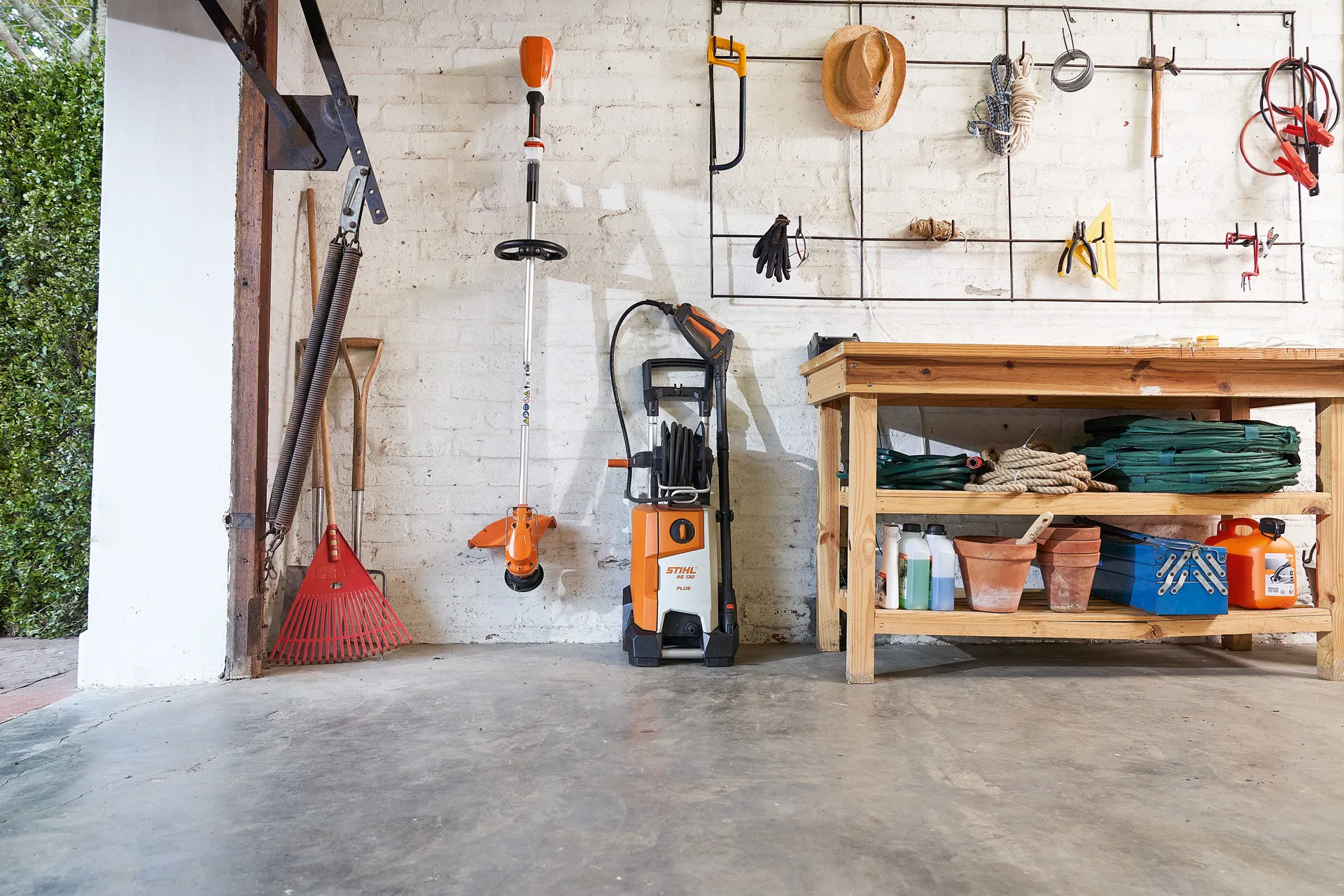
Store it dry and off the floor
- Choose a dry space: a sealed shed or garage beats an open lean-to
- Get tools off the concrete: hang them or shelve them, because cold floors draw condensation
- Use moisture absorbers: silica gel or moisture-trap tubs help in a damp Bay of Plenty winter
- Cover, but let it breathe: a breathable cover keeps dust off without trapping moisture underneath
Which tools are "year-round"
Not everything gets to rest. Some tools are just as busy in July as they are in January, so instead of storing these, you keep them cleaned, fuelled or charged, and ready to grab.
Chainsaws
The clearest year-round tool of all. Winter is firewood season, and between cutting and splitting, clearing storm-damaged branches and pruning dormant trees, the chainsaw barely sits down. Keep it sharp, keep the chain correctly tensioned, and keep fresh fuel and bar oil on hand.
Leaf blowers and blower vacs
Autumn and winter leaf-fall keeps blowers in regular use across the Bay. Clearing leaves off paths and decks is also a genuine safety job in winter, when wet leaves turn hard surfaces into a slip hazard.
Battery tools
Battery-powered gear is the easiest of all to keep going year-round. There is no fuel to degrade, no carburettor to gum up, and no pull-start to wrestle on a cold morning — just charge the battery and go. For quick winter jobs in between the rain, a battery tool is often the one you will actually reach for. The trade-off is simply keeping the batteries charged and stored at a sensible temperature.
Hand tools and pruning gear
Secateurs, loppers and pruning saws stay busy through the dormant pruning season. Keep blades sharp and clean and they are ready whenever a dry afternoon appears.
A quick winter-storage checklist
Before you shut the shed for the season, run through this:
- Cleaned — debris off, metal wiped, filters clear
- Fuel sorted — drained or stabilised, never left stale
- Batteries charged — stored cool, dry and topped up
- Off the floor — hung or shelved, in a dry space
- Year-round tools ready — chainsaw sharp and fuelled, blower and battery gear charged and accessible
- Anything dodgy noted — book a repair or service rather than discovering it in spring
When to bring in the experts
You can do most winter storage prep yourself, but some things are worth handing over — especially internal fuel-system cleaning, carburettor work, and a proper service on a tool that has had a hard year. A pre-winter service means the gear you are storing goes away in top condition and the year-round tools you are relying on are ready for the season's heaviest jobs.
The goal of winter storage is simple: every tool comes out in spring at least as good as it went in. Clean it, sort the fuel, mind the batteries, and keep it dry — that is the whole game.
If you would rather not tackle it alone, the STIHL-certified team at STIHL SHOP Tauranga can service and storage-prep your seasonal gear, and make sure your year-round tools are ready for whatever winter throws at them. Bring it in before the cold really sets in.